
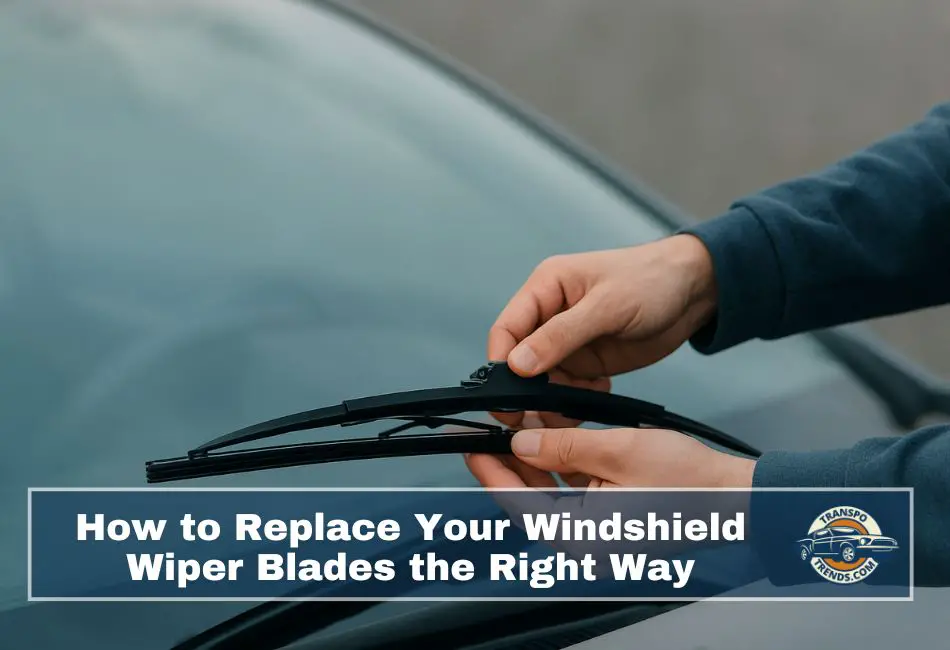
This step-by-step guide will show you exactly how to identify worn wipers, choose the right replacements, and install them correctly. The process requires no special tools, no mechanic appointment, and only a few minutes of your time.
Why You Should Replace Your Wipers Regularly
Windshield wiper blades are made from rubber or silicone. Over time, exposure to sunlight, road grime, temperature changes, and simple wear and tear cause them to harden, crack, or warp.
When that happens, the rubber no longer conforms smoothly to the glass. The result is streaking, skipping, or loud squeaks that make driving in the rain more stressful than it needs to be.
According to the American Automobile Association (AAA), most wiper blades should be replaced every six months to a year, depending on climate and driving conditions. Drivers in hot, sunny regions may find the rubber deteriorating faster, while those in snowy areas often deal with ice damage.
A worn blade is not just an annoyance. Reduced visibility, even for a moment, can be dangerous in heavy rain or snow. Replacing your wipers before they fail is a simple form of preventative maintenance that can have real safety benefits.
Step 1: Identify When Your Wipers Need Replacing
Before you buy anything, take a close look at your current wiper blades. Here are the most common signs that indicate it is time to change them:
- Streaks or missed sections: If the wipers leave thin lines or entire areas of glass unwiped, the rubber has likely lost its shape.
- Chattering or squeaking sounds: A skipping motion or squeak usually means the blade edge is no longer making even contact with the windshield.
- Visible damage: Cracks, nicks, or missing chunks along the rubber edge are clear signs of deterioration.
- Water beading inconsistently: If you see patches where the water does not clear properly, your wipers are past their prime.
If you notice any of these issues, it is time to move to the next step.
Step 2: Find the Correct Size and Type for Your Vehicle
Not all wiper blades are created equal. Different cars use different blade lengths and connector types. Using the wrong size can lead to poor wiping performance or damage to the wiper arm.
- Check your car’s manual – It lists the correct lengths for both the driver’s and passenger’s side. Many cars use two different sizes.
- Use an online blade finder – Tools such as the Rain-X Blade Finder allow you to enter your year, make, and model to get the exact fit.
- Bring the information to the parts store – A quick conversation with the clerk can confirm the correct sizes and attachment style.
The most common connector in modern vehicles is the J-hook, a simple curved hook at the end of the wiper arm. Other styles include pin and bayonet connectors, but J-hooks are by far the most widespread. Check the connector before purchasing to ensure the new blade will fit your existing arm.
Step 3: Remove the Old Wiper Blades
- Lift the wiper arm away from the windshield until it locks in a vertical position. Place a folded towel on the glass as a safety measure in case the arm springs back down.
- Locate the release tab on the underside of the blade, near where it meets the arm.
- Press the tab and slide the blade downward toward the base of the arm. This motion will unhook it from the J-hook connector.
- Gently remove the blade and set it aside.
Do not force the blade off. If it feels stuck, double-check that you are pressing the correct tab. Different manufacturers sometimes design the release mechanism slightly differently, but the downward slide is consistent on most J-hook types.
Step 4: Prepare and Install the New Wiper Blades
New blades often come with a protective strip covering the rubber edge. This is typically bright yellow or red. Its purpose is to prevent the blade from deforming during shipping. Make sure to remove this strip completely before installation. If you forget, the wipers will not make proper contact with the glass.
- Align the new blade with the arm’s hook.
- Slide the blade upward onto the hook until you hear a distinct “click.” That sound means it has locked into place.
- Gently lower the wiper arm back onto the windshield.
Repeat these steps for the other side. Once both blades are on, spray windshield washer fluid generously and run the wipers to check for smooth, even movement. If you hear unusual noises or see streaking, make sure each blade is fully locked in.
Step 5: Choose Quality Blades for Long-Term Performance
While basic blades get the job done, premium blades offer better performance and longer life. Two top options worth considering are:
- Rain-X Silicone Endura – These blades use advanced silicone rubber designed to last twice as long as standard rubber. As they wipe, they leave a thin hydrophobic coating on the glass, causing rain to bead up and run off more efficiently. They are particularly effective in heavy rain.
- Bosch ICON Premium Beam Blades – Bosch ICON blades use a bracketless design that resists snow and ice buildup. They feature a dual rubber compound that remains flexible in both heat and cold, and a wear indicator that changes color when it is time to replace them. These are excellent for SUVs or trucks that face harsher weather conditions.
Both of these options are vehicle-specific, so check the blade finder or your car’s manual to get the correct sizes before ordering.
Step 6: Maintain Your Wipers to Extend Their Life
Replacing your blades is only part of the equation. Proper maintenance can extend their lifespan significantly:
- Never run your wipers on a frozen windshield. Ice can tear the rubber or damage the wiper motor. Always defrost and scrape ice off first.
- Clean the blades regularly. Wipe the rubber with a damp cloth and windshield washer fluid every few weeks. Dirt buildup is one of the leading causes of streaking.
- Keep your windshield clean. Dust, pollen, and road grime on the glass act like sandpaper against the rubber. A clean windshield keeps your blades smooth and quiet.
- Use washer fluid, not hot water. Pouring hot water on a frozen windshield can crack the glass. Let the defroster and proper fluid do the work.
- Replace both blades at the same time. Uneven wear can cause new blades to perform poorly if the other side is already damaged.
Quick Comparison Table
| Feature | Rain-X Silicone Endura | Bosch ICON Premium Beam |
|---|---|---|
| Material | Silicone with hydrophobic coating | Dual rubber compound |
| Durability | Up to 2× longer than standard blades | Excellent all-season durability |
| Weather Performance | Superior in heavy rain | Excels in snow and ice |
| Wear Indicator | No | Yes (color change) |
| Best For | Sedans, daily drivers in rainy climates | SUVs, trucks, vehicles in harsh weather conditions |
| Installation | J-hook, simple click-in | J-hook, simple click-in |