
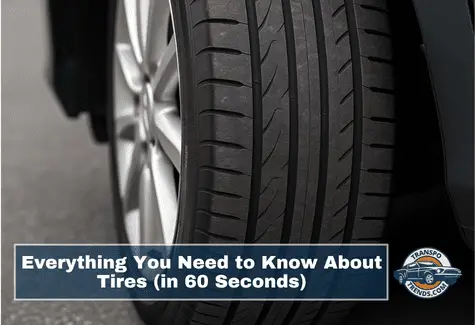
Tires might not be the flashiest part of your car, but they are literally where the rubber meets the road – your safety and comfort ride on them.
In this quick yet comprehensive guide (inspired by a rapid-fire 60-second rundown), we will unpack essential tire tips and truths.
1. Cheap Tires vs. Quality Tires: Are You Really Saving Money?
It is tempting to save a few bucks with bargain-brand tires, especially when faced with the high price of premium ones. However, cheap tires do not ride well – and they could cost you more in the long run.
Why? Budget tires are often made with lower-grade rubber compounds and simpler designs, meaning they tend to wear out faster and may be more prone to defects.
In fact, poor design or cheap materials can increase the risk of tread separations – a dangerous failure where the tire’s belts or tread layers come apart at speed.
By contrast, quality tires from reputable brands use advanced materials and undergo stricter quality control. They offer better traction and shorter stopping distances, which is critical for your safety on daily commutes.
Premium all-season tires, for example, can drastically improve your car’s handling and braking on both dry and wet roads.
They are also engineered for longevity – many good tires are rated to last 50,000 to 70,000 miles, whereas ultra-cheap tires might wear out much sooner.
Ride comfort is another factor. Cheaper tires often create more road noise and vibration. Higher-quality tires, on the other hand, are built with refined rubber compounds that dampen road noise and smooth out the ride. That means a quieter cabin and a less jittery steering wheel, especially at highway speeds.
Bottom line: go with the best tires your budget can afford. Your car’s only contact with the road is through those four patches of rubber. So it pays (in both money and peace of mind) to choose a quality tire.
2. Rotate Your Tires Regularly – or Face Uneven Wear
If you neglect to rotate your tires, you are setting them up for a weird, uneven wear pattern and a shorter life. Rotating tires means periodically swapping their positions (front to back, or in a prescribed pattern) so that they wear evenly.
Why is this important? In most cars, the front tires tend to wear faster (they carry more weight and handle all the steering and most braking), while the rear tires wear differently. Without rotation, each tire continues to wear in the same spot, and the difference just gets worse.
The result can be one pair of tires becoming bald while the others still have tread, or strange scalloped wear in one area – not good. Not rotating your tires shortens their lifespan significantly.
Experts recommend rotations every 5,000 to 7,000 miles – about every other oil change. Regular rotation ensures that all four tires wear out evenly together, helping you get the maximum mileage from the set.
Rotation also prevents annoying vibrations caused by uneven wear. Many drivers come into a shop complaining of a steering wheel shake, only to find out their tires wore unevenly due to missed rotations.
Do yourself (and your tires) a favor – schedule that rotation. It is a small effort that pays off in smoother rides, longer-lasting tires, and better safety.
3. Listen to Your Tires: Uneven Wear Patterns and What They Mean
Your tires speak volumes – if you know how to read them.
- Center wear: Your tires are likely overinflated. Too much air causes the middle of the tire to bulge and take most of the load.
- Edge wear on both sides: This usually means underinflation. The middle of the tire is not in full contact with the road, so the shoulders bear the load and wear faster.
- One-sided wear: Alignment is probably off. When the tire leans too much to one side, it scrubs the tread away unevenly.
- Cupping or scalloping: A sign of suspension problems or unbalanced tires. The tire bounces while rolling, creating random patches of wear.
Each of these patterns is a symptom of a deeper problem. Fixing the root cause – whether it is a pressure adjustment, alignment, or suspension check – can prevent tire damage or blowouts.
Inspect your tire tread every month. Just a quick look can save you from dangerous wear or expensive repairs.
Choosing the Right Tires (and Understanding Tire Ratings)
Most everyday drivers will do best with all-season tires. These offer good traction in dry, wet, and light snowy conditions, along with a comfortable ride and solid tread life.
If you live in an area with harsh winters, consider using winter tires during the cold months. Their softer rubber compound gives better grip in freezing conditions.
For warm-weather performance driving, summer tires provide superior handling. For off-road use, look into all-terrain or mud-terrain tires – but note they are noisier and less comfortable on pavement.
Decoding the Sidewall
- Example: P215/60R16 94V
- 215: Tire width in millimeters
- 60: Aspect ratio (height of sidewall as percentage of width)
- R: Radial construction
- 16: Rim diameter in inches
- 94: Load index (the maximum load the tire can carry)
- V: Speed rating (how fast the tire can safely go)
Use the load index and speed rating recommended by your car’s manufacturer (usually found on the driver’s door jamb). Avoid tires with lower ratings than your original tires.
Summary
| Tire Tip or Topic | Why It Matters (Impact) |
|---|---|
| Avoid Ultra-Cheap Tires | Cheap materials lead to faster wear, defects, and reduced safety. Premium tires last longer and ride better. |
| Rotate Tires Regularly | Promotes even tread wear, prevents early replacements, and reduces steering vibration. |
| Maintain Proper Tire Pressure | Overinflation wears out the center tread; underinflation wears out the edges and risks sidewall failure. Proper inflation = better grip and fuel efficiency. |
| Keep Tires Balanced & Aligned | Balancing prevents vibrations and cupping. Alignment keeps tire wear even and improves control. |
| Watch for Uneven Tread Wear | Diagnosing tread wear patterns helps identify inflation, alignment, or suspension issues before bigger problems arise. |
| Choose the Right Tire Type | All-season for most drivers; winter tires in snowy areas; summer for performance. Always meet or exceed load/speed ratings. |