
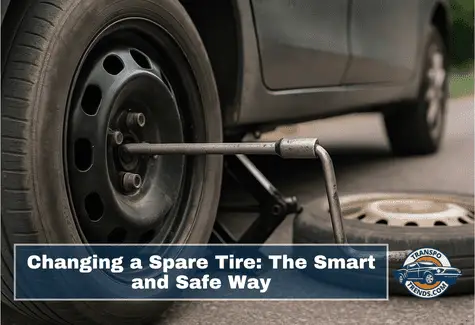
It usually starts with something simple: a flat tire on the side of the road. You reach for your spare, ready to get back on the road, only to find that the lug nuts will not budge.
Worse, they are rusted solid. Most drivers in this situation might consider giving them a strong kick out of frustration. Do not. There is a smarter, safer way to tackle this problem without damaging your wheel or risking injury.
Let us walk through a reliable method to change a spare tire efficiently.
Step One: Loosen Rusted Lug Nuts Like a Pro
Rust on lug nuts is a common issue, especially in areas where roads are salted or the vehicle sits idle for long periods.
Trying to kick the wrench or yank it forcefully may damage the wheel studs or injure your foot. A much safer trick involves using your jack as a torque amplifier.
Here is how it works:
- Place the tire wrench onto the rusted lug nut.
- Position your car jack underneath the wrench handle.
- Slowly raise the jack. As the jack lifts, it applies vertical force on the wrench.
The pressure exerted is more consistent and powerful than human strength, making even the most stubborn lug nuts turn loose.
Repeat this process for each lug nut. You will be surprised by how effective this method is—and how much safer it feels.
Step Two: Position the Jack in the Right Spot
Once the lug nuts are loosened but not removed completely, the next step is to lift the car. However, not every part under your vehicle is suitable for jack placement. Positioning the jack incorrectly can damage your car’s frame or, worse, cause the car to slip.
Look for a reinforced area under the car—usually a small bulge or ridge near the wheel well. This spot is designed to support the vehicle’s weight. This is the area you want your jack to rest on. Refer to your owner’s manual if you are unsure.
Step Three: Safety First—Use the Old Tire as a Support
Before removing the flat tire, there is one more safety measure you should take. After jacking the car up, place the flat tire underneath the car’s frame near the jack. Why?
If the jack fails or the car shifts, the tire under the frame can act as a cushion, preventing the car from slamming to the ground and potentially injuring someone. It is a small step that adds a significant layer of safety.
Step Four: Mounting the Spare Tire
With the old tire off, lift the spare and align it with the bolts. Push it onto the hub until it is seated firmly. Then, tighten the lug nuts by hand in a crisscross pattern to ensure even pressure across the wheel.
Once hand-tightened, lower the car slowly using the jack. When the tire touches the ground and the jack is no longer supporting the car’s weight, use the wrench to tighten the lug nuts further.
Remember to use the crisscross method again and tighten gradually to prevent warping the wheel.
Step Five: Mind the Speed—Spare Tires Are Not for Racing
Spare tires, especially space-saver (donut) types, are not meant for high speeds or long distances. Most are rated for a maximum speed of 80 kilometers per hour (about 50 miles per hour) and should only be used to get you to a repair shop.
They have limited tread and are not designed to handle extended driving, rough terrain, or emergency braking.
Make it a point to replace or repair your main tire as soon as possible. Keeping a spare on for too long compromises your vehicle’s handling and safety.
A Few More Pro Tips Before You Hit the Road
- Inspect the Spare Regularly: Make sure your spare tire is inflated and in good condition. Many people forget to check it during routine maintenance.
- Carry a Lug Wrench with Proper Leverage: The wrench that comes with your car may be too short for effective torque. Consider upgrading to a longer-handled wrench or a four-way cross wrench.
- Use Anti-Seize Lubricant: After dealing with rusted lug nuts, apply a dab of anti-seize compound to the threads. It helps prevent corrosion and makes future tire changes much easier.
- Practice in Your Driveway: It might sound excessive, but doing a practice run at home helps you stay calm and prepared during a real emergency.
Why Knowing These Tricks Matters
Changing a tire should not feel like a desperate struggle on the roadside. With the right technique, tools, and mindset, it becomes a manageable, even empowering task.
The method of using the jack to break rusted bolts is not only ingenious but reflects the kind of resourcefulness every driver should carry.
You do not need brute force. You need leverage, strategy, and safety.
As a car owner, keeping calm and relying on smart solutions will not only help you solve problems efficiently but will also protect your vehicle from unnecessary damage.
Each choice—from where you place the jack to how you torque the bolts—can mean the difference between a successful roadside fix and a costly towing bill.