
When you bring your car in for a repair, your mechanic fixes the problem and sends you on your way. What they rarely have time to do is share the small habits that would keep you from coming back so often. There’s a queue of cars waiting, and these tips don’t fit on a repair invoice.
So here are five of them. None of these are hard, none of them cost much, and every one of them quietly saves you money and extends the life of your car.
1. Use Your Parking Brake Every Time, Even on an Automatic
This is the one that surprises people most. Most automatic drivers never touch the parking brake. They just shift into Park and walk away. But here’s what’s happening inside the transmission when you do that.
When you put an automatic in Park, a small piece of metal called the parking pawl locks the transmission in place. If you’re parked on any kind of slope, the entire weight of your car rests on that one little part. Over time, that stresses it and can lead to an expensive transmission repair.
The fix is simple. Set your parking brake first, then shift into Park. That way the brake holds the car and the parking pawl is just a backup, the way it was meant to be. Yes, this really is a thing, and it applies to automatics just as much as manuals.
2. Clean Your Wiper Blades by Hand
People treat wiper blades as throwaway parts, replacing them the moment they start to streak. But a lot of that streaking isn’t worn rubber. It’s built-up grime on the blade.
Every so often, give the rubber edge of each blade a good wipe with a mild detergent. It takes two minutes and clears off the road film, dead bugs, and dust that cause the smearing in the first place.
Keep the rubber clean and conditioned, and you’ll get noticeably more life out of each set. That’s a few dollars saved and clearer glass in the rain, which matters more for safety than people think.
3. Use a Window Shade to Keep Your Car Cool
A sunshade isn’t just about comfort on a hot day. Yes, it keeps the cabin cooler so you’re not stepping into an oven, but the real benefit is protection.
That trapped sunlight bakes your dashboard until it cracks and fades, and the heat is hard on all the electronics behind it. Pull down your visor and put a reflective shade in the windshield whenever you park in the sun.
It’s one of the cheapest ways to protect an interior that’s genuinely expensive to repair or replace. A reflective option like the EcoNour accordion windshield sunshade folds flat, pops back into the windshield in seconds, and reflects the heat before it ever reaches your dash.
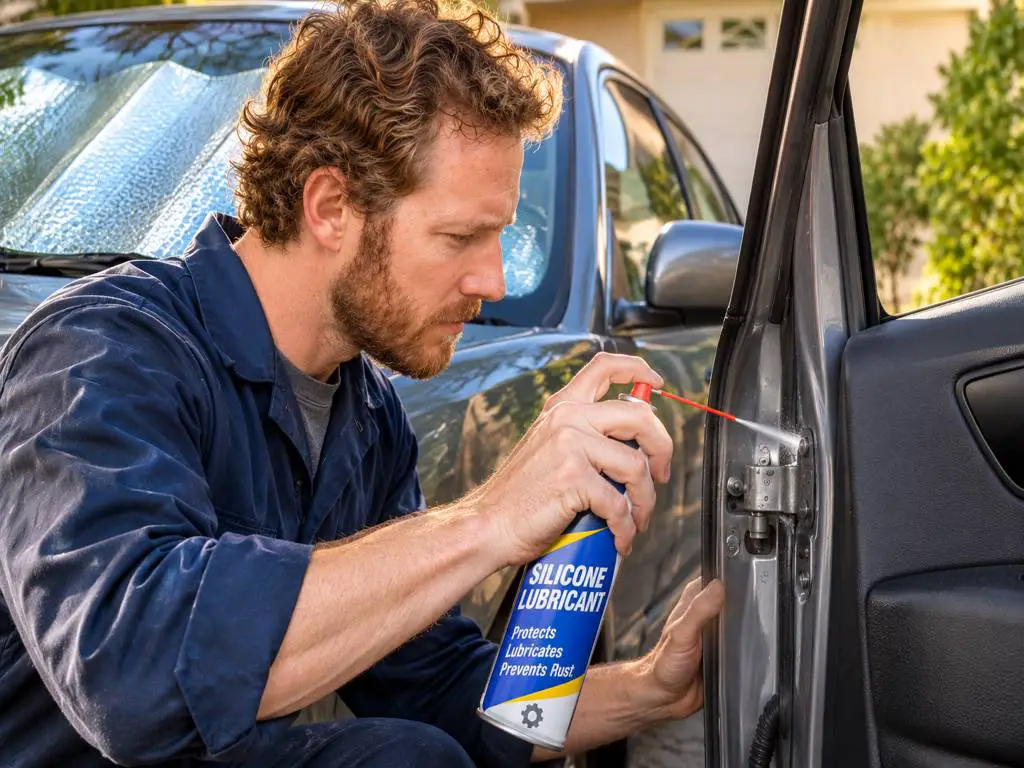
4. Lubricate Your Door, Trunk, and Hood Hinges
Every door, the trunk, the tailgate, and the hood swings on hinges, and those hinges need lubrication to keep moving freely. Most people never think about them until something starts to squeak, bind, or feel stiff.
Every three to six months, hit the hinges and latches with a proper lubricant. A silicone spray or white lithium grease is the best thing to use. Skip the general-purpose oils, which attract dirt and gum up over time.
A dry, neglected latch is where handles bind and eventually snap, and that hardware is never cheap to fix. A quick spray twice a year keeps everything working smoothly for the life of the car. A single can of white lithium grease covers every hinge and latch on the vehicle for years.
5. Don’t Let Your Car Sit for More Than a Month
A car that sits unused isn’t resting. It’s slowly deteriorating. When a vehicle sits still for too long, moisture builds up in the fluids, the seals dry out, and problems start that have nothing to do with how many miles are on it.
The rule I give people is this. Don’t let your car sit without driving for more than a month, and when you do drive it, take it for at least one hour straight. That full hour matters. It gets everything up to proper operating temperature, which lets any water that’s crept into the fluids evaporate off. It also circulates oil and fluids over the seals, keeping them lubricated so they don’t dry out and start leaking.
A quick five-minute trip around the block doesn’t do this. The engine never fully warms up, so the moisture never burns off. If you’ve got a second car, a seasonal vehicle, or you travel a lot, mark a monthly drive on your calendar. It’s the difference between a car that’s ready when you need it and one that greets you with a dead battery and fresh leaks.
The Bottom Line
These are the little things, the habits that never make it onto a repair bill because your mechanic is too busy fixing the big stuff. But the big stuff is often what the small stuff turns into when it’s ignored.
Set your parking brake, keep your blades clean, shade your dash, grease your hinges, and don’t let the car sit. For a broader checklist of simple maintenance that pays off, the experts at AAA keep a useful library. Do these five, and you’ll spend less time in the waiting room and more money in your pocket.