
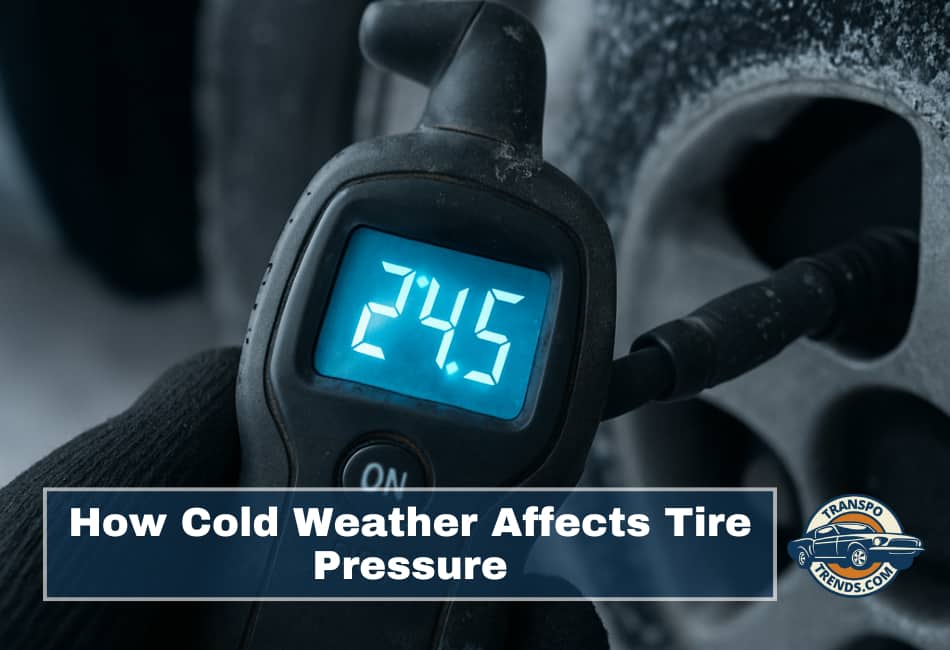
Cold weather impacts tire pressure more than most drivers realize. This post will guide you through exactly why that happens, what it means for your car, and what to do about it.
Why Cold Weather Causes Tire Pressure to Drop
When temperatures fall, the air molecules inside your tires slow down and contract. This natural reaction causes the air pressure in your tires to drop.
For every 10 degrees Fahrenheit the temperature drops, your tire pressure can decrease by about 1 to 2 PSI (pounds per square inch).
That means a 30-degree overnight swing could lead to a pressure drop of 3 to 6 PSI—enough to trigger your dashboard warning.
This is not necessarily a leak. It is science. The ideal gas law (which links pressure, volume, and temperature) shows us that air pressure lowers as temperatures decline. Your tires become slightly “flatter” simply because the air is taking up less space.
The Risks of Driving with Low Tire Pressure
Ignoring that warning light is not a good idea. Underinflated tires affect your driving experience in several key ways:
- Safety: With less air in them, tires cannot maintain proper contact with the road. This compromises steering response, lengthens stopping distances, and reduces traction—especially dangerous on icy or wet winter roads.
- Tire Wear: Tires that are consistently underinflated wear unevenly. The outer edges of the tread take on more weight and degrade faster, which can reduce your tire’s lifespan significantly.
- Fuel Economy: Underinflated tires increase rolling resistance. That means your engine has to work harder to move the car, leading to lower fuel efficiency and more money spent at the pump.
Different Tires, Different Cold Weather Behavior
All tires lose pressure in the cold, but how they behave overall depends on their design.
- All-Season Tires: These are balanced for moderate climates and lose pressure predictably with the cold. Regular monitoring will keep them within safe operating levels.
- Winter Tires: Designed specifically for cold conditions, winter tires use softer rubber compounds that grip better on icy surfaces. However, because cold rubber is more flexible, winter tires should be inflated slightly higher—usually 2 to 3 PSI more than standard recommendations—to maintain optimal performance.
- Performance Tires: These are sensitive to pressure variations. If you drive a sports car or a vehicle with low-profile tires, cold weather demands extra attention to tire pressure, as even small changes can affect handling.
How to Maintain Correct Tire Pressure in Winter
Staying ahead of pressure drops is easy with a few smart habits:
- Check Tire Pressure Monthly: Use a quality gauge when your tires are cold—ideally in the morning, before you have driven.
- Use the Manufacturer’s Recommendation: This information is found on a sticker inside your driver’s side door or in the owner’s manual. Never use the number printed on the tire’s sidewall—that is the maximum pressure, not the recommended one.
- Adjust for Temperature Swings: For every 10-degree Fahrenheit drop in temperature, add 1 to 2 PSI to compensate. If a polar front is coming, check the pressure again after the temperature stabilizes.
- Inspect Tread and Sidewalls: Look for cracks, cuts, or bulges. Cold rubber is more brittle, making tires more vulnerable to damage.
- Do Not Forget the Spare: Cold affects all tires, even the one you do not use every day.
When to Visit a Professional
Some issues need expert attention. If you notice any of the following, it is time to head to a tire service center:
- Persistent loss of pressure despite topping off
- Visible damage to the tread or sidewall
- One tire wearing faster than others
- Strange noises or vibrations when driving
- After hitting a pothole or driving on rough winter terrain
A technician can inspect for leaks, correct the pressure, rotate tires if needed, and ensure everything is road-ready for the season.
Summary Table: Key Facts About Cold Weather and Tire Pressure
| Topic | Key Insight |
|---|---|
| Pressure Drop Rate | 1–2 PSI for every 10°F temperature drop |
| Underinflation Risks | Reduced safety, uneven wear, lower fuel efficiency |
| Tire Type Behavior | Winter tires need more PSI; all types affected by cold |
| Maintenance Tips | Check monthly, when cold; inflate to door sticker PSI |
| When to See a Professional | Repeated low pressure, visible damage, fast wear, post-impact concerns |
Proper tire pressure is not just a number. It is safety, efficiency, and peace of mind. Cold weather might lower your pressure, but staying informed ensures you are never caught off guard.