
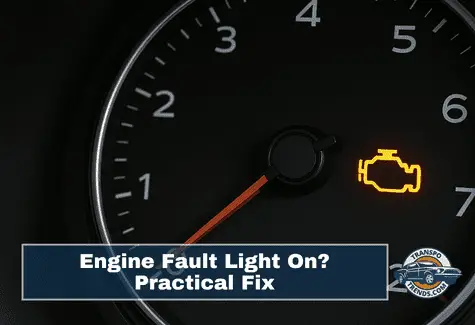
There is a moment every driver dreads. You are cruising along, perhaps with the windows down and music on, when suddenly—a yellow engine light appears on your dashboard.
This little light, often shaped like an engine block or sometimes reading “CHECK ENGINE,” can cause immediate anxiety. What does it mean? Is the car going to stop? Am I about to face a massive repair bill?
Before you panic, take a deep breath. That yellow warning is not always a death sentence for your engine. In fact, one of the most common causes of the check engine light is something you can fix yourself—without spending a single dollar.
Let us walk through exactly what this light means, why it comes on, and how one small part—the camshaft solenoid valve—might be the source of the issue. You will learn how to inspect it, clean it, and reinstall it safely.
By the end of this guide, you may be able to turn that engine light off by yourself and avoid an unnecessary trip to the mechanic.
What Is the Engine Fault Light and Why You Should Never Ignore It
The engine fault light, also known as the check engine light (CEL), is part of your car’s onboard diagnostics system (OBD-II).
It lights up when the system detects a malfunction that affects your vehicle’s emissions, performance, or safety.
This light is yellow or amber and often shaped like an engine block. In newer cars, it may be accompanied by messages like “SERVICE ENGINE SOON” or “CHECK ENGINE.”
According to the National Institute for Automotive Service Excellence (ASE), the most common reasons for a check engine light include:
- Loose gas cap
- Failing oxygen sensor
- Catalytic converter issues
- Spark plug or ignition coil failure
- Faulty camshaft or crankshaft sensors
Among these, a failing camshaft solenoid valve is particularly common—and surprisingly simple to address.
The Real Culprit: The Camshaft Solenoid Valve
The camshaft solenoid valve, also known as the variable valve timing (VVT) solenoid, plays a critical role in managing your engine’s performance. It regulates the flow of oil to the camshaft actuators, which in turn adjust valve timing for optimal fuel efficiency and power.
When this valve gets clogged with debris or oil sludge, it can send false signals to your car’s ECU (Engine Control Unit), triggering the engine light. Left untreated, it may lead to engine misfiring, poor fuel economy, and long-term wear.
Most mechanics will recommend replacing the entire solenoid—at a cost of $300 to $800 per solenoid, and sometimes more if bundled with diagnostic fees. However, in many cases, the issue is simply dirt and sludge—and a good cleaning may restore function without any replacement needed.
Step-by-Step Guide: How to Clean Your Camshaft Solenoid Valve
Before you begin, ensure your engine is cool and your car is parked on a level surface with the handbrake engaged.
Tools and Supplies You Will Need:
- Socket wrench set
- A pair of gloves
- Engine-safe cleaner or degreaser
- A clean towel or cloth
- Small bucket or tray to catch oil
- Safety glasses (recommended)
Disclaimer: Always consult your car’s manual. Some engine layouts vary, and accessing the solenoid may differ by vehicle make and model.
Step 1: Locate the Camshaft Solenoid Valve
Open your hood and locate the camshaft solenoid valve. It is usually found near the top of the engine, often close to the timing cover or valve cover. It will have an electrical connector and is secured with bolts.
Step 2: Disconnect and Remove the Valve
- Unplug the electrical connector.
- Use your socket wrench to remove the bolts.
- Gently pull out the solenoid. Some oil may drip out, so use your tray.
Now, take a look at the removed valve. If it looks dark, gummy, or sludgy, you have found the problem.
Step 3: Clean the Solenoid
Spray the valve with engine degreaser or a carburetor-safe cleaner. Do not submerge it in fluid or scrub harshly, as this can damage the electrical components.
- Shake out the dirt.
- Wipe clean with a lint-free cloth.
- Let it air-dry for a few minutes.
Be gentle. You are not trying to polish it—just remove contaminants that could block oil flow.
Step 4: Reinstall the Valve
- Align the solenoid with its port.
- Secure it with the original bolts.
- Reconnect the electrical plug.
Make sure everything is tight and flush. A loose seal may cause an oil leak.
Step 5: Start the Car and Check the Engine Light
Now, the moment of truth.
Start your engine. Let it idle for a minute or two.
If the camshaft solenoid was the culprit and the cleaning was successful, the engine light should turn off either immediately or after a short drive cycle.
If the light persists, the valve may be damaged beyond repair—or the problem may lie elsewhere in the system.
Why This DIY Approach Matters
Performing a repair like this yourself is not just about saving money (although avoiding a $3000 bill is no small win). It is about empowering yourself as a car owner.
Many vehicle issues can be traced to preventable maintenance problems—sludge buildup, dirty sensors, worn hoses. Learning to address these can extend the life of your vehicle and help you avoid being at the mercy of unnecessary diagnostics.
In an age when cars are becoming increasingly computerized, basic mechanical understanding is still incredibly valuable.
Is This Safe for All Vehicles?
Not all engine fault lights are caused by camshaft solenoids. If your car is:
- Stalling
- Making abnormal noises
- Emitting smoke or fumes
- Displaying flashing check engine light
Then stop driving immediately and consult a professional. A flashing light indicates a critical misfire that can damage your catalytic converter.
However, if your car is running normally and the light came on without any warning signs, then a DIY inspection of the camshaft solenoid is a safe first step.
Article Summary Table
| Component | What It Does | Issue When Dirty | DIY Fix |
|---|---|---|---|
| Engine Fault Light | Signals an error detected by the onboard diagnostics system | Lights up amber/yellow when ECU detects an issue | Inspect error with OBD reader |
| Camshaft Solenoid Valve | Regulates oil flow to control engine valve timing | Engine runs rough, light turns on | Remove, clean, and reinstall |
| Cleaning Cost | None if DIY | Saves up to $800 or more in labor and parts | Use degreaser and basic tools |
| When to Seek a Mechanic | If engine stalls, smokes, or light flashes | Indicates serious internal fault | Stop driving, call for service |
Final Thought
Modern vehicles are filled with sensors and warning systems, but too many drivers rely entirely on professionals for every small issue.
While expert help is crucial in many situations, learning how to troubleshoot simple components like the camshaft solenoid valve gives you control over your vehicle’s well-being.
This repair might not work for every engine light scenario, but for many car owners, it is the practical, empowering step that prevents unnecessary panic—and expense.
So the next time that yellow light appears, do not just brace for a repair bill. Pop the hood, take a look—and apply what you now know. Your car, and your wallet, will thank you.