The terms mechanic and technician are often used interchangeably. In everyday conversation, most people mean the same thing when they say either one.
But inside the automotive and transportation industries, the distinction can matter—especially as vehicles become more complex.
The difference isn’t about status or intelligence. It’s about focus, training, and how modern vehicles are serviced.
Let’s break it down.
What Mechanics and Technicians Have in Common
At the most basic level, mechanics and technicians do the same essential job:
they keep vehicles running safely and reliably.
Both work on:
- Cars
- Trucks
- Motorcycles
- Commercial vehicles
- Specialized transportation equipment
Both are skilled tradespeople with deep knowledge of vehicle systems, diagnostics, and repair procedures. Both perform maintenance, inspections, and repairs that keep vehicles on the road and supply chains moving.
That overlap is why the two terms are often treated as interchangeable.
Where the Differences Begin
The distinction starts with what each role typically emphasizes.
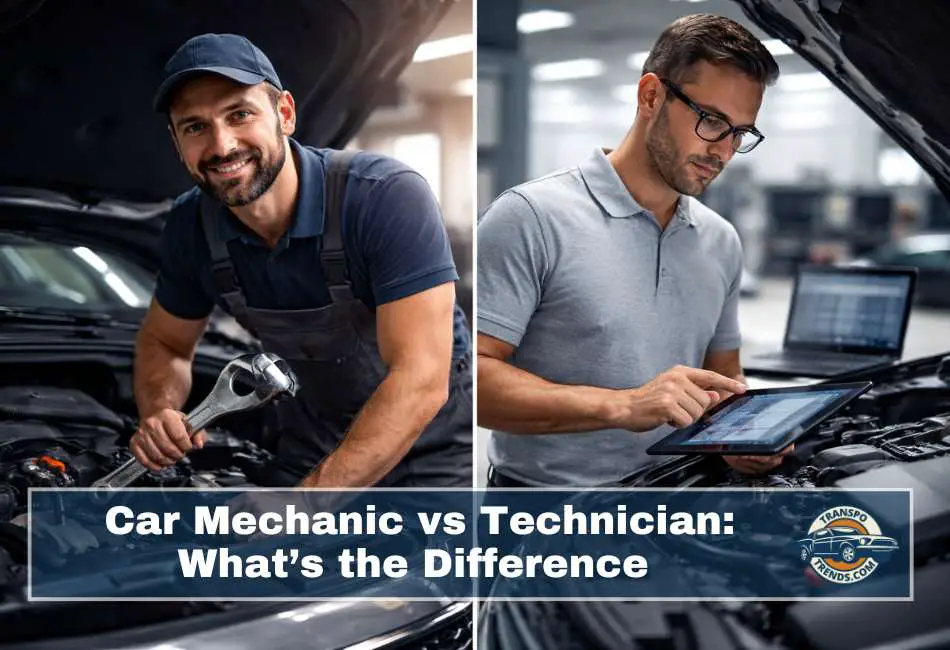
Mechanics: Hands-On Mechanical Focus
Traditionally, mechanics are associated with:
- Diagnosing mechanical failures
- Repairing brakes, suspension, steering, and driveline components
- Engine repairs and mechanical troubleshooting
- Physical wear-and-tear issues
This role is deeply hands-on. It relies on:
- Mechanical intuition
- Experience-based diagnosis
- Physical disassembly and repair
Many mechanics develop their expertise through years of real-world experience.
Technicians: Electronics and Systems Specialists
Technicians are more closely associated with:
- Electrical systems
- Computer-controlled components
- Vehicle software and modules
- Advanced diagnostics using scan tools
Modern vehicles rely heavily on:
- Sensors
- Control units (ECUs)
- Driver assistance systems
- Integrated software
Technicians are trained to:
- Interpret diagnostic data
- Work with digital systems
- Update and recalibrate vehicle software
As vehicles evolve, this skillset becomes increasingly critical.
The Line Is No Longer Clear
In reality, most modern professionals do both.
A mechanic may diagnose electrical faults.
A technician may replace mechanical components.
Today’s vehicles don’t allow strict separation. Mechanical systems, electronics, and software are tightly integrated. Diagnosing a brake issue may involve scanning modules.
Fixing a drivability problem may require both mechanical repair and electronic recalibration. That’s why the industry increasingly treats the roles as overlapping rather than separate.
Why the Term “Technician” Is Becoming More Common
As vehicles grow more advanced, the industry has shifted toward the term technician to reflect the level of technical knowledge required.
Modern vehicles include:
- Advanced driver assistance systems
- Hybrid and electric powertrains
- Complex emission controls
- Networked electronic systems
Working on these systems requires:
- Formal training
- Up-to-date technical education
- Comfort with digital tools
The term “technician” emphasizes that modern vehicle service is no longer just mechanical—it’s technical.
The Future of the Transportation Industry
The transportation industry isn’t shrinking. It’s expanding.
Vehicles still need to be:
- Maintained
- Diagnosed
- Repaired
- Updated
Commercial trucks deliver essential goods. Passenger vehicles remain critical to daily life. As electrification and automation increase, the demand for skilled professionals rises—not falls.
Industry projections show over one million skilled transportation workers will be needed in the coming years, including:
- Automotive technicians
- Diesel specialists
- Welders
- Machinists
These roles are essential infrastructure.
Education and Training Matter More Than Ever
Because vehicle technology changes rapidly, modern professionals benefit from:
- Structured training
- Hands-on experience
- Exposure to late-model systems
Whether someone identifies as a mechanic or technician, the path forward increasingly involves continuous learning.
So… Mechanic or Technician?
In practical terms:
- The work overlaps
- The skills intersect
- The goal is the same
The difference isn’t about superiority—it’s about specialization.
What matters most is not the title, but the ability to:
- Diagnose accurately
- Repair correctly
- Adapt as vehicles evolve
As technology continues to advance, the roles will keep blending. The vehicles will keep changing. And skilled professionals—whatever title they use—will remain essential.