
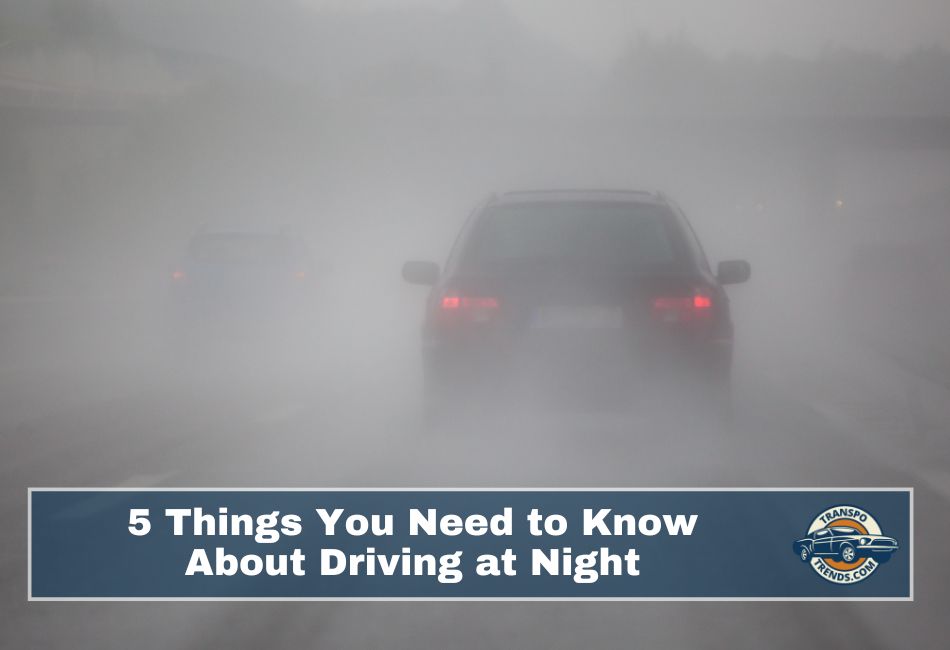
According to the National Safety Council, fatal crashes are three times more likely at night than during the day.
If that does not catch your attention, it should. But with a few smart habits, you can beat the odds and drive with confidence after dark. Here are five things every everyday driver needs to know about staying safe on the road at night.
1. Trust the Fog Line—Not Oncoming Headlights
You have seen it before. A car coming from the opposite direction has lights that hit your eyes like a laser beam. You squint, flinch, maybe even duck your head a little. That moment of blindness? It is dangerous.
So here is the move: focus on the fog line. That is the solid white line on the right edge of your lane. Use it as a visual anchor when bright lights are coming at you.
This simple trick helps keep your car centered in your lane and protects your eyes from the worst of the glare. You are still aware of what is coming, but your eyes are not locked onto the light show.
Another tip: dim your dashboard. Bright screens inside the car can mess with your night vision just as badly. Tone down the glow and keep your focus outside.
2. Keep Your Glass and Lights Spotless
Nighttime visibility is already limited. Do not make it worse by driving with a dirty windshield or cloudy headlights. Light scatters when it hits dirt, dust, or fogged-up plastic. That means glare gets worse, and your view gets fuzzier.
Take a few minutes each week to clean your windshield inside and out. It is surprising how much grime builds up on the inside—and how much better you will see once it is gone. Do the same for your mirrors and rear window.
Now the big one: your headlights. If they are cloudy or yellowed, you are losing brightness and visibility. A quick headlight restoration kit can bring them back to life.
Here is a highly rated headlight cleaning kit on Amazon.
Your taillights matter too. Drivers behind you need a clear view of your brake lights, especially in the dark. Give them a quick wipe next time you are filling up.
3. Use High Beams—But Not Like a Jerk
High beams are great. They give you the full view of the road when it is pitch black and nobody is around. But used the wrong way, they turn you into that driver—the one blinding everyone else.
The rules are simple: turn off your brights when you see headlights coming at you or when you are behind someone. If you can see their lights, they can feel your glare.
Also, do not use high beams in fog, heavy rain, or snow. It sounds backward, but the extra light just bounces back at you and makes things worse. In those cases, stick to low beams and use your fog lights if you have them.
Driving in a rural area? Use your brights when the road is empty, but stay alert. Switch back to low beams as soon as another car shows up.
4. Slow Down and Move Over for Stopped Vehicles
This one is not just about etiquette—it is about safety. If you see a car pulled over with hazard lights on, move over if you can. If you cannot, slow down.
Imagine changing a flat tire on a dark shoulder while traffic whips by at 70 miles per hour. That is not just stressful, it is deadly. Every state has a Move Over law that says you have to make space for emergency vehicles, and many apply to regular drivers too.
Even if the law did not exist, it is just common sense. Give people space. It could be a family dealing with a breakdown or someone helping an injured driver. Your extra few seconds of caution can mean everything.
5. Know Your Headlight Height—Especially If You Drive a Truck or SUV
Trucks and SUVs have a commanding view of the road, but that height comes with a catch: your headlights are positioned perfectly to blast into the eyes of people in smaller cars. That can be blinding, especially if your lights are too bright or misaligned.
Here is what to do: check your headlight alignment. Many auto shops will do it quickly, and it makes a huge difference. Even if your vehicle came from the factory, alignment can drift over time.
Also, resist the urge to install aftermarket ultra-bright bulbs. Be aware of the impact your lights have and back off a little when sitting behind smaller vehicles at a stoplight.
Here is a quick table to keep these tips straight:
| Tip | What to Do | Why It Matters |
|---|---|---|
| Use the Fog Line | Focus on the right-hand white line during glare | Prevents blindness from oncoming headlights |
| Clean Glass and Lights | Wash windshield, mirrors, headlights, and taillights | Reduces glare, improves visibility |
| Use High Beams Responsibly | Use when safe, dim for oncoming or nearby vehicles | Prevents blinding others, improves safety |
| Slow Down and Move Over | Give space to stopped vehicles with hazards | Protects roadside drivers and passengers |
| Know Your Vehicle’s Light Height | Check alignment and adjust behavior in taller vehicles | Reduces glare for other drivers, shows courtesy |